
Before taking a tandem paragliding flight, many people wonder what take-off, the flight itself and landing are really like. The experience is usually much simpler than it looks from the outside, but understanding the process can help you feel calmer before flying.
In this article, we explain what happens from the moment you put on the flight harness until you land back on the ground. If you already know you want to fly and are looking for practical information about formats, prices and availability, you can visit the main page to plan your tandem flight with a pilot in Gran Canaria.
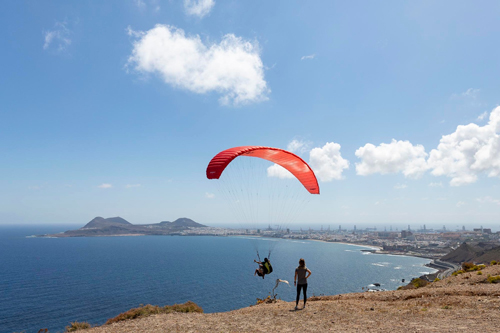
Preparation before the flight
Before take-off, the passenger puts on the tandem flight harness. It is a type of harness worn like a backpack, which then allows you to sit comfortably during the flight. On the ground, it may feel a little bulky, but once you are in the air, the position changes and it becomes much more comfortable.
The pilot checks the buckles, the equipment, the wing, the lines and the passenger’s position. You will also receive a short briefing so you know what to do during take-off and landing. You do not need any technical knowledge: the most important thing is to listen, follow the instructions and stay calm.
What take-off is like in tandem paragliding
Take-off is often the part that creates the most nerves before flying. However, it is usually a short and progressive process. The pilot waits for the right moment, checks the wind and tells you when to start moving forward.
In most cases, you only need to run or walk with determination for a few steps. The paraglider inflates behind you, builds pressure and begins to lift the pilot and passenger. If the wind is well oriented, the run can be very short.
If something is not perfect during the first moments of take-off, the process is stopped and prepared again. One advantage of paragliding is that the take-off can be aborted before leaving the ground if the pilot considers it better to repeat it.
What you need to do as a passenger
Your role is simple: move forward when the pilot tells you, do not sit down too early and keep running until the pilot says you can relax. Many people tend to sit down too soon because they feel the paraglider pulling upwards, but the right thing to do is to follow the instructions until the flight is properly established.
The pilot coordinates the wing, direction, timing and control of the paraglider. You only help during those first few steps.
What the flight feels like once you are in the air
Once you are in the air, the pilot will tell you when you can sit comfortably in the harness. From that moment on, the feeling changes a lot: the noise decreases, the movement becomes smoother and you begin to enjoy the height, the landscape and the sensation of gliding through the air.
A paragliding flight does not feel like falling or like a roller coaster. It is more gradual and quieter. There may be exciting moments, especially during take-off or turns, but many people are surprised by how calm the flight can feel.
Depending on the conditions, the flight can be more scenic and relaxed or more dynamic. In any case, the pilot adapts the experience to the passenger, the wind and the available safety margin.
The role of the wind during the flight
Wind is an essential part of paragliding. It helps with take-off, allows the glider to stay in the air and determines where it is possible to fly. But not every wind works: direction, strength, stability and the relationship with the terrain all matter.
Gran Canaria has several flying areas that may work depending on wind direction, such as Los Giles, Las Coloradas, Agaete and other points on the island. The choice of take-off site is not based only on the views, but also on safety and flight quality.
If you want to learn more about the weather side of flying, you can read more about weather and paragliding. As a passenger, the important thing is to understand that the pilot decides when and where to fly according to the real conditions of the day.
What landing is like in a tandem flight
Before landing, the pilot will explain what you need to do. Usually, you only need to lift your legs slightly or take a few gentle steps when your feet touch the ground, depending on the terrain, wind and approach speed.
Landing is often calmer than many people imagine. The pilot prepares the approach, reduces speed and chooses the right moment to touch down. As with take-off, the most important thing for the passenger is to follow the instructions and not anticipate the movement.
Flying tandem in the north of Gran Canaria
The north of Gran Canaria offers very attractive landscapes for tandem paragliding when conditions allow it. Views towards the coast, Las Canteras, El Confital and the island’s terrain make the experience special for both visitors and residents.
Take-off sites such as Los Giles and Las Coloradas are well known in paragliding on the island, but each flying day is assessed individually. Sometimes the best place to fly is not the most famous one, but the one that offers the best conditions that day.
A simple experience when you know what to expect
Tandem paragliding is designed so that a person with no experience can discover the sport accompanied by a pilot. Knowing what preparation, take-off, the flight and landing are like helps reduce nerves and makes it easier to enjoy the moment.
If you want to live this experience and check updated information before booking, you can visit the main page to organise your first tandem flight in Gran Canaria.